
You step into the water. It’s warm, the kids are playing by the shore, and suddenly someone shouts: “Jellyfish!” One question immediately comes to mind—are jellyfish in the Baltic Sea dangerous? Is it just harmless “jelly,” or a real risk of getting stung? Don’t worry. Jellyfish do occur in the Polish sea and… yes, they can sting. But in most cases, contact results only in mild irritation rather than a serious burn. In this article, you’ll find the key facts: which jellyfish species you’re most likely to encounter in the Baltic, when their stings are stronger, and what to do if contact happens.
Do jellyfish in the Baltic Sea sting—and are they really dangerous?
Yes—jellyfish in the Baltic Sea do have stinging cells, but the species most commonly encountered is considered harmless to humans. This is the key piece of information if you’re wondering whether Baltic jellyfish sting and whether there’s anything to worry about. Jellyfish belong to the group of cnidarians—they have venomous cells called nematocysts. However, in Polish waters, species with relatively weak toxic effects are the most common.
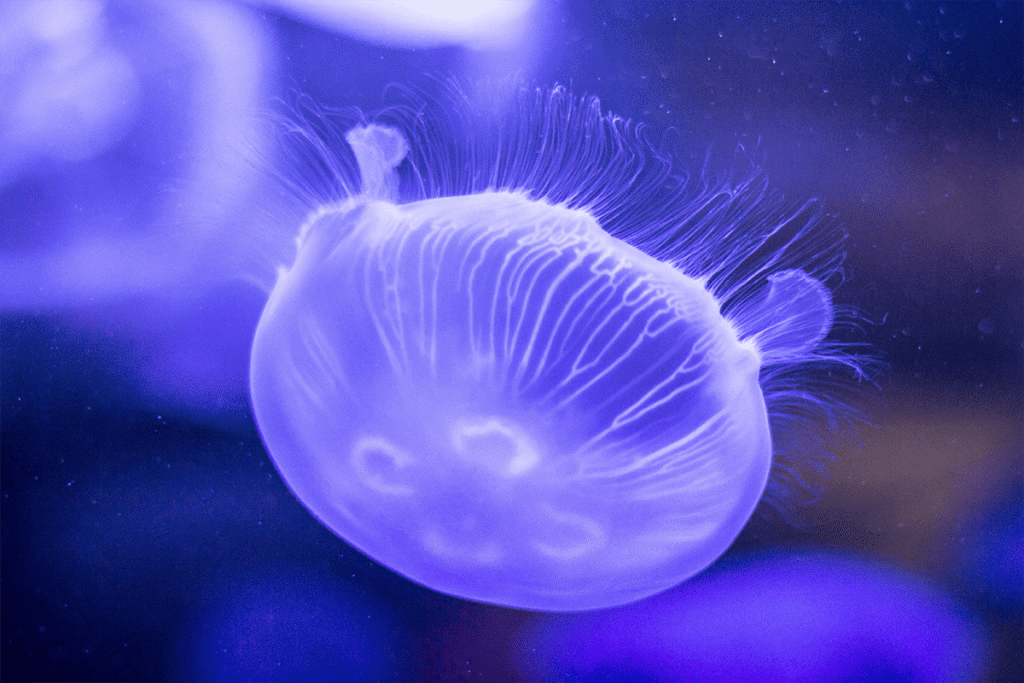
The species you’ll encounter most often is the moon jellyfish (Aurelia aurita), commonly referred to as the “Baltic jellyfish.” About 98% of its body is made up of water, which makes it almost invisible in the sea. Contact with it may be felt as:
- a slight stinging sensation,
- a brief burning feeling,
- mild redness of the skin.
This is not a typical “burn” like after contact with a tropical jellyfish. In most cases, the symptoms go away on their own after a short time.
The situation is different when the lion’s mane jellyfish (Cyanea capillata) appears—a larger, rarer species that is much more noticeable upon contact with the skin. It is this species that is responsible for more painful reactions along the Polish coast. So if you’re asking: does a Baltic jellyfish sting? The answer is: yes—but usually mildly.
Wondering if the water is warm enough in June? Check out our post on the temperature of the Baltic Sea and see when swimming becomes a real pleasure.
Which jellyfish are you most likely to encounter along the Polish coast?
In the Baltic Sea, two types of jellyfish dominate: the moon jellyfish and the lion’s mane jellyfish—and these are responsible for most reported encounters with stinging marine animals.
It’s the most common jellyfish in the Baltic Sea, especially during the summer. Its characteristic features include:
- a transparent, slightly bluish bell,
- four visible “horseshoe” shapes in the center,
- a diameter usually up to several centimeters.
Its venom is considered harmless to humans. In practice, contact usually means brief irritation—rarely anything more.
Lion’s mane jellyfish – larger and more noticeable
This Baltic jellyfish can be noticeably more problematic. Adult specimens can have a bell up to about 30 cm in diameter, with tentacles reaching even several meters in length.
Contact with it may cause:
- stronger pain,
- redness and swelling,
- itchy blisters,
- in rare cases, an allergic reaction.
It most often appears closer to the shore between late July and September, especially after strong winds and storms. It’s exactly this species that makes the question “are jellyfish in the Baltic Sea dangerous?” come up in the media every season.
Think you already know everything about the Baltic Sea? Check out our post on 10 fascinating facts about the Baltic that can surprise even regular seaside visitors.
Jellyfish stings in the Baltic Sea – what are the symptoms and when should you react?
Symptoms after contact with a jellyfish appear quickly—sometimes within just a few seconds. Usually, within a few minutes, you know something wasn’t right.
Most commonly, you may experience:
- a burning, “needle-like” pain,
- redness of the skin (erythema),
- mild swelling,
- sometimes small, itchy blisters.
It looks a bit like a nettle sting. Or like a stronger mosquito bite—just with a more intense, localized burning sensation. If it was a moon jellyfish, the most common species in the Baltic, the symptoms are usually mild. It may sting, tingle, and cause redness—but after a few dozen minutes, it typically starts to subside.
It’s worse if you come into contact with a lion’s mane jellyfish. In that case, the pain can be more intense. The skin may become more red, and the swelling can be greater. Some people also experience stronger itching. And this is important—observe not only your skin, but also how you feel overall.
Be especially cautious if general symptoms appear, such as:
- shortness of breath,
- dizziness,
- a feeling of weakness,
- fainting,
- a rapid, irregular heartbeat.
This is no longer just a mild irritation—it may be an allergic reaction. In such a situation, don’t wait. Report it to a lifeguard. Ask for help. It’s better to check something “just in case” than to ignore a warning sign.
It’s also worth knowing that jellyfish along the Baltic coast don’t appear near the shore without a reason. After strong winds, storms, or changes in sea currents, they are often “pushed” closer to the beach. That’s when accidental contact becomes more likely—especially if the water is slightly murky. So before you step into the sea, take a quick look at the water. Check if lifeguards are signaling anything. Sometimes, just a moment of attention is enough to avoid an unpleasant surprise.
Planning a day by the sea? Before you lay down your towel, check out our guide on what’s worth knowing about the beach in Łeba—just a few tips can really make your time at the beach easier.
Spend a family vacation in Łeba!
Jellyfish in the Baltic Sea – do they always sting and what does first aid look like?
Not every jellyfish in the Baltic Sea will cause strong symptoms, but after contact, it’s important to act quickly and calmly. The worst thing you can do is panic and start rubbing your skin nervously with a towel or your hand. What really matters here is staying composed and following a few simple steps.
The procedure is simple:
- get out of the water as quickly as possible,
- do not rub the skin—this can activate more stinging cells,
- rinse the affected area with seawater (not fresh water),
- remove any visible tentacle fragments, e.g. with tweezers or through a piece of fabric.
It may sound simple, but these basic steps are exactly what help limit further stinging. The goal is to prevent the release of more venom and avoid spreading it over a larger area of the skin.
What should you avoid?
- Don’t rinse with fresh water.
- Don’t use alcohol.
- Don’t spread or rub the irritated area.
Fresh water can activate unfired nematocysts and worsen the symptoms. That’s why, even though the natural reaction is to run to a tap or shower with fresh water, it’s better to avoid it at first. First, manage the situation on the beach, and only then take care of further skin treatment.
Wondering which beach in Łeba to choose—the eastern or the western one? Check out our comparison and see where swimming conditions are usually calmer.
Seaside holidays with children at the Baltic Sea – are jellyfish a real threat?
In practice, jellyfish in the Baltic Sea rarely pose a serious threat to families with children. Most encounters end with mild irritation.
If you’re planning a seaside holiday with children, the most important thing is a sensible approach: pay attention to lifeguard announcements, avoid swimming when there’s a mass appearance of jellyfish, and stay calm if a situation occurs.
At Holiday Park Kacze Stawy in Łeba, located in a large green area behind the forest, about 4 km from the beach and 3 km from the center of Łeba, you can combine beach time with a safe alternative in the form of:
- a large, heated outdoor pool with slides,
- an indoor pool with a sauna (for hotel guests),
- six playgrounds and organized activities for children.
This gives you comfort: even if jellyfish appear near the shore, the day isn’t lost. You can choose comfortable seaside cottages for families with children (Standard, Plus, Premium) or family rooms by the sea with access to additional hotel amenities.
And finally, the most important thing: jellyfish are a part of nature. They appear, disappear, and come back. They shouldn’t take away the joy of your vacation. It’s enough to know how to react—and to have a plan B for days when the sea isn’t inviting for a swim. Because a well-planned trip to the Baltic isn’t just about the beach. It’s about peace, space, safety, and the confidence that no matter the conditions, your family will truly relax.
Frequently Asked Questions
Got questions? Take a look—you might find the answer right away!